
What Is Spam in Geometry Dash? Wave, CPS & Control
Table of Contents
What Geometry Dash spam means
In Geometry Dash, spam is rapid repeated input used to get through a section that needs frequent direction changes or jumps. The important part is not simply clicking as fast as possible. A useful spam input pattern is fast enough for the section and repeatable enough to keep control.
That is why this site separates two measurements: raw speed in the Geometry Dash CPS Test and movement control in the Geometry Dash Spam Test.
Why wave spam feels different
Wave sections translate press-and-release timing into alternating diagonal movement. If the intervals between inputs vary too much, the path becomes harder to keep centered even when the average CPS is high.
Use the Wave Trainer when you want to isolate that movement skill. Its presets are practice modes, not a claim that the browser simulator reproduces the official game engine exactly.
CPS vs consistency
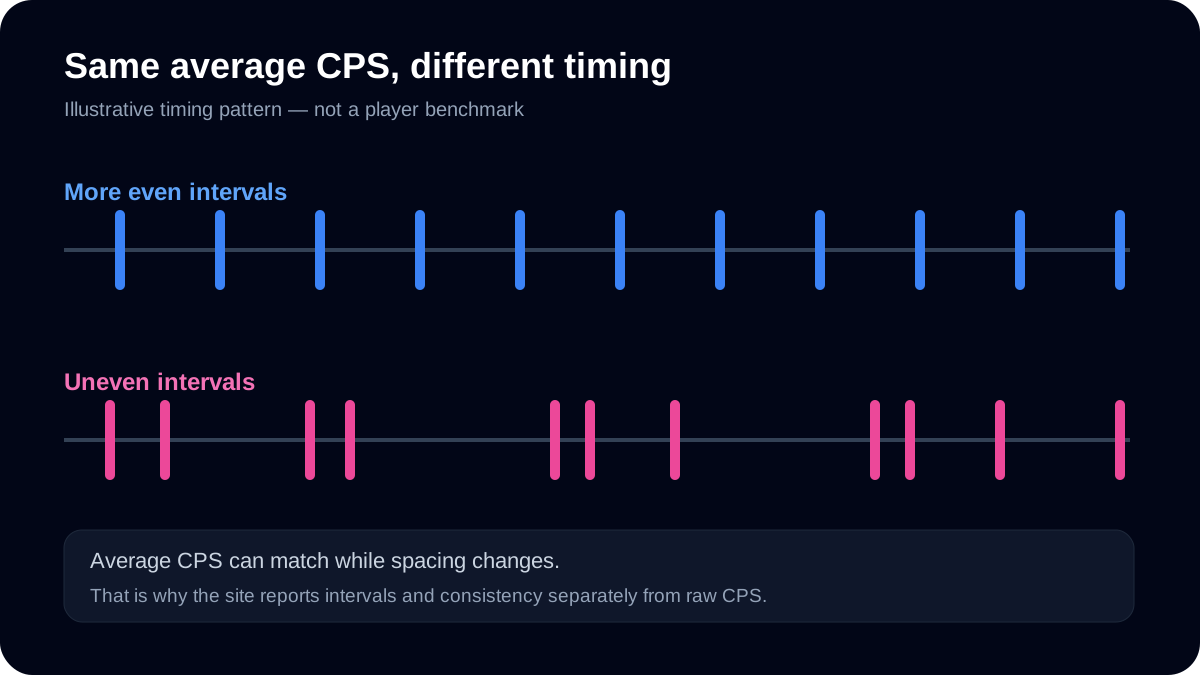
CPS tells you how many inputs you produce per second. Consistency describes how evenly those inputs arrive. Two players can record the same average CPS while producing very different timing patterns.
- Average CPS: total clicks divided by elapsed time.
- Peak 1s CPS: the largest number of browser-registered clicks inside a rolling one-second window.
- Average interval: average milliseconds between inputs.
- Consistency: a site-specific score based on variation between input intervals.
A practical training loop
- Record a comfortable CPS baseline instead of immediately chasing a one-second maximum.
- Practice an easy wave corridor and focus on smooth, repeatable movement.
- Increase difficulty only after several similar runs, not after one lucky attempt.
- Stop the session if your hand, wrist or forearm becomes painful or numb.
Try a two-part test yourself
First, run the 10-second CPS Test three times with the same input method. Note your typical CPS instead of using only the highest score. Then select Normal Wave with the same difficulty for three runs. Write down the error you notice most: a late release, too many reversals, or an attempt that collapses when you increase speed.
If CPS is stable but wave control varies, raw speed is not your only limitation. Work on reversal timing before increasing the corridor difficulty. This experiment is useful because the two tools ask different questions; it is not a claim that the browser model predicts your result in the official game.
Common mistakes
The most common problems are tensing the whole arm, using a clicking technique that you cannot sustain, changing settings every attempt, and treating a peak CPS number as the only measure of progress. Use one setup long enough to compare like-for-like runs.
This guide defines the overall spam concept. For a measurement-focused explanation of intervals and variance, read Why Click Timing Consistency Matters.
Ready to Test Your Skills?
Don't just read about it. Put your clicking speed and wave consistency to the test right now.
Written By
Geometry Dash Spam Editorial
Maintains the site's browser tools and source-checked training guides.